9 November 2026
What is residence time, and why it decides where river plastic collects
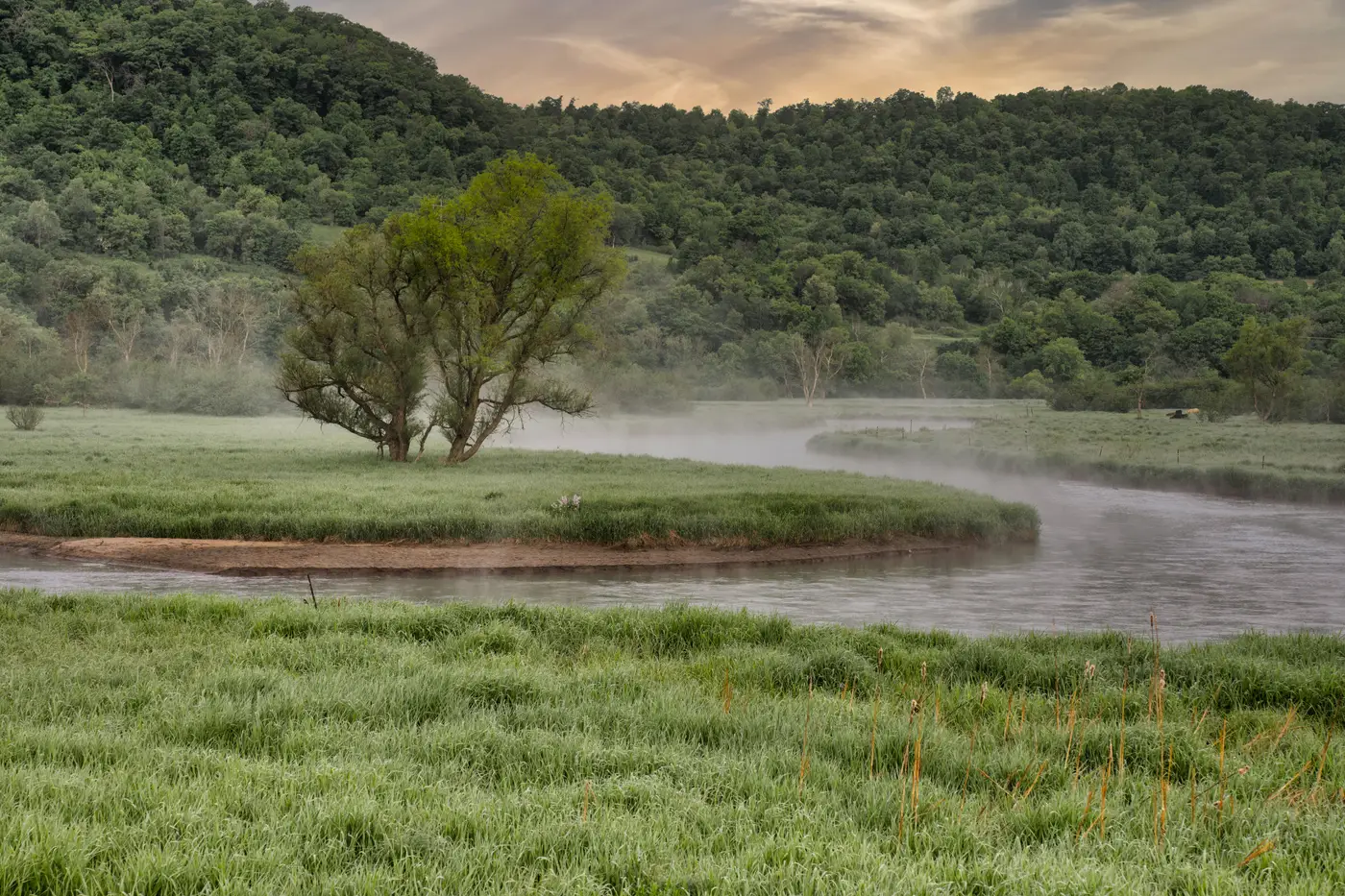
Residence time is how long a parcel of water, and whatever's floating in it, stays in a given stretch of river before it moves on downstream. In a fast, straight reach with no obstructions, residence time is short: water comes in one end and leaves the other in minutes. In a backwater behind a bridge pier, or a slack eddy on the inside of a bend, that same parcel might circle for hours. Longer residence time means more chances for a bottle or a bag to get pulled out of the main current and parked somewhere.
The litter that collects in a reach is the litter that got a chance to stop moving. Volume passing through doesn't determine it. A straight run with heavy traffic can stay clean while a quiet bend downstream fills up, because the bend is where the water, and the debris riding on it, slows down enough to settle out.
Where residence time goes up
A few conditions reliably slow water down enough to matter for siting:
Channel bends create a secondary circulation pattern, with faster flow on the outside of the curve and a recirculating eddy on the inside. That inside bend is where debris lines up along the bank, sometimes visibly, sometimes just below the surface.
Backwaters behind bridge piers, groynes, or fallen trees work the same way but more abruptly. Flow separates around the obstruction and curls back on itself, and anything floating gets caught in that curl until a high-flow event flushes it out.
Weirs, low dams, and culvert inlets create a pooling effect upstream of the structure. Water backs up, slows, and drops sediment and floatables alike before squeezing through the opening.
Vegetated margins and reed beds don't just slow the water mechanically, they also give debris something to physically snag on, which extends residence time almost to zero mobility until someone pulls it out by hand.
Confluences, where a tributary meets the main stem, often create a zone of mismatched velocity where debris from both channels gets shuffled into an eddy rather than carried straight through.
None of these are exotic. They're the same features a field crew scouts for when picking a boom site by eye. The difference is that residence time isn't fixed. It shifts with discharge: a bend that holds debris at base flow flushes clean at bankfull, while a dry-in-August backwater can become the main collection point after a storm pulse in October.
Reading residence time without gauge data
Most river cleanup programmes don't have a residence-time model for every reach they manage, and building one from stage data and bathymetry is a lot of survey work for a stretch of river that might get reassigned in the next cleanup cycle anyway. What you usually have instead is memory: this bend collected last spring, so we'll check it again.
That's a reasonable starting point, but it's backward-looking. Flow regimes shift with rainfall and upstream land use, and a bend that held debris two seasons ago can stop holding it once a log jam upstream changes how the current splits. The accumulation zone moves even when the channel geometry doesn't.
A monthly read of where floating debris is sitting, checked against what the channel shape would predict, closes that gap without anyone needing to run a hydraulic model first. Plastic Accumulation flags that pattern from multispectral satellite imagery on a monthly cadence, so a crew can check whether this month's debris line matches last month's bend or has shifted to a new backwater before a boom gets moved or a new one gets ordered.
Residence time is still the reason the plastic is sitting where it's sitting. The satellite read just tells you where that reason is currently winning, this month, on this reach, without waiting for someone to notice on the next site visit.
If your crews are still choosing boom sites from last year's notes, it's worth checking where this month's accumulation actually is.