13 October 2026
Gross pollutant trap vs. litter boom: what's the difference?
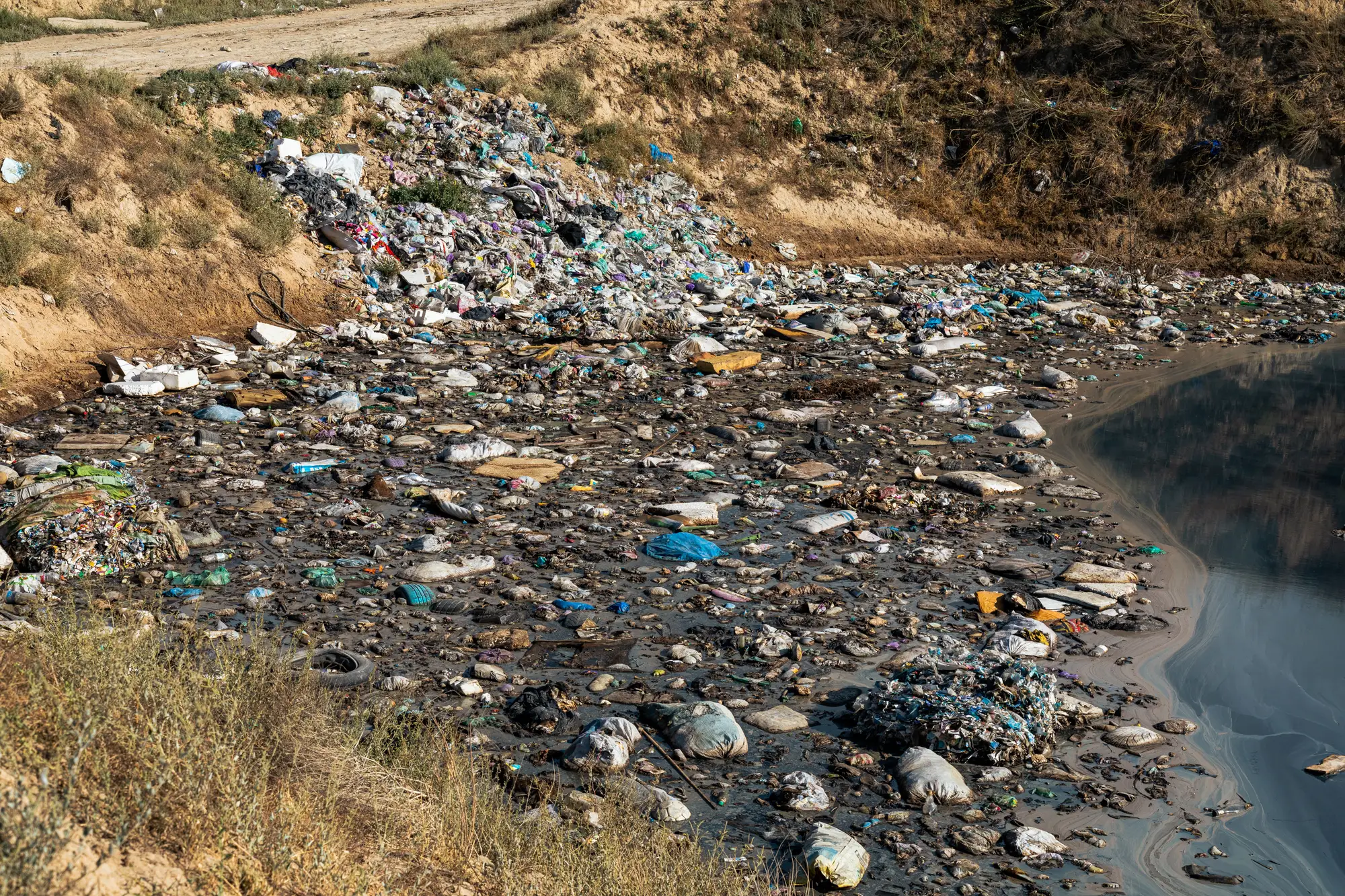
If you've sat through a council stormwater meeting, you've heard both terms thrown around like they're interchangeable. They're not. A gross pollutant trap and a litter boom solve different parts of the same problem, and mixing them up in a grant application or a maintenance plan costs somebody a wasted budget line.
What a gross pollutant trap does
A gross pollutant trap, usually shortened to GPT, is a fixed structure built into the stormwater network itself. Think of a concrete pit, a screen, or a baffle system installed where a drain or culvert discharges, catching leaves, bottles, cigarette butts, and sediment before that water ever reaches open channel. Councils size these for a catchment's peak flow and clean them out on a schedule, often with a vacuum truck or a crane and a skip bin. A GPT does its work upstream of the river, at the point source. It's an engineered box, bolted into infrastructure, and it only intercepts what passes through the pipe it sits on.
A GPT only catches what passes through that pipe. Litter that's already in open water, blown in off a bank, dropped from a bridge, or carried down a tributary with no trap on it, never passes through a GPT at all. It controls what enters the pipe network and does nothing for what's already past that point.
Where a litter boom comes in
A litter boom is the opposite kind of tool. It's a floating barrier strung across a river, a side channel, or a harbor mouth, and it relies on current and wind to push floating debris against it so a crew can net it out or a conveyor can lift it. Booms don't care where the trash entered the system. A bottle that blew off a sidewalk three kilometers upstream and a bag that fell off a bridge this morning end up at the same boom if the hydraulics push them there.
The catch with booms is siting. A boom works where debris collects, usually a bend, an eddy, a narrowing, or somewhere current slows against a bank. Put it fifty meters off that spot and it catches almost nothing while the real accumulation point keeps piling up untouched. Programme coordinators know this because they've pulled a boom that wasn't earning its maintenance visits and moved it, sometimes more than once, chasing the drift pattern by eye and by whoever happened to notice a bad buildup last week.
Picking the right tool for a given reach
Neither device replaces the other. A catchment with heavy road and footpath litter upstream of a stormwater outfall usually needs GPTs at the outfalls, full stop. A reach of open river with multiple uncontrolled inputs, seasonal flow changes, and known debris buildup at a bend needs a boom, and it needs that boom in the right spot.
Sizing a GPT is a pipe-and-flow calculation: diameter, velocity, screen mesh, done once at design stage and revisited only if the catchment changes. Siting a boom is a different kind of question, and it has to be answered again and again. Flow patterns shift with the season, a storm moves the main accumulation point downstream, and a boom installed off last year's data starts missing material it used to catch.
This is where a stormwater trash capture plan stops being a one-time engineering spec and turns into something that needs rechecking on a schedule. A boom crew rotating a budget between two or three candidate sites needs to know, month to month, which bend is actually holding debris right now rather than where it collected during last spring's survey.
If you're the one deciding where the next boom goes, or whether the current one is still in the right place, Plastic Accumulation gives you a monthly read of where floating plastic is collecting along your stretch, flagged from satellite imagery, so the siting call is based on where debris is gathering now. Check the early access page if that's the gap you're working on.