26 October 2026
Timing a litter boom deployment around high flow season
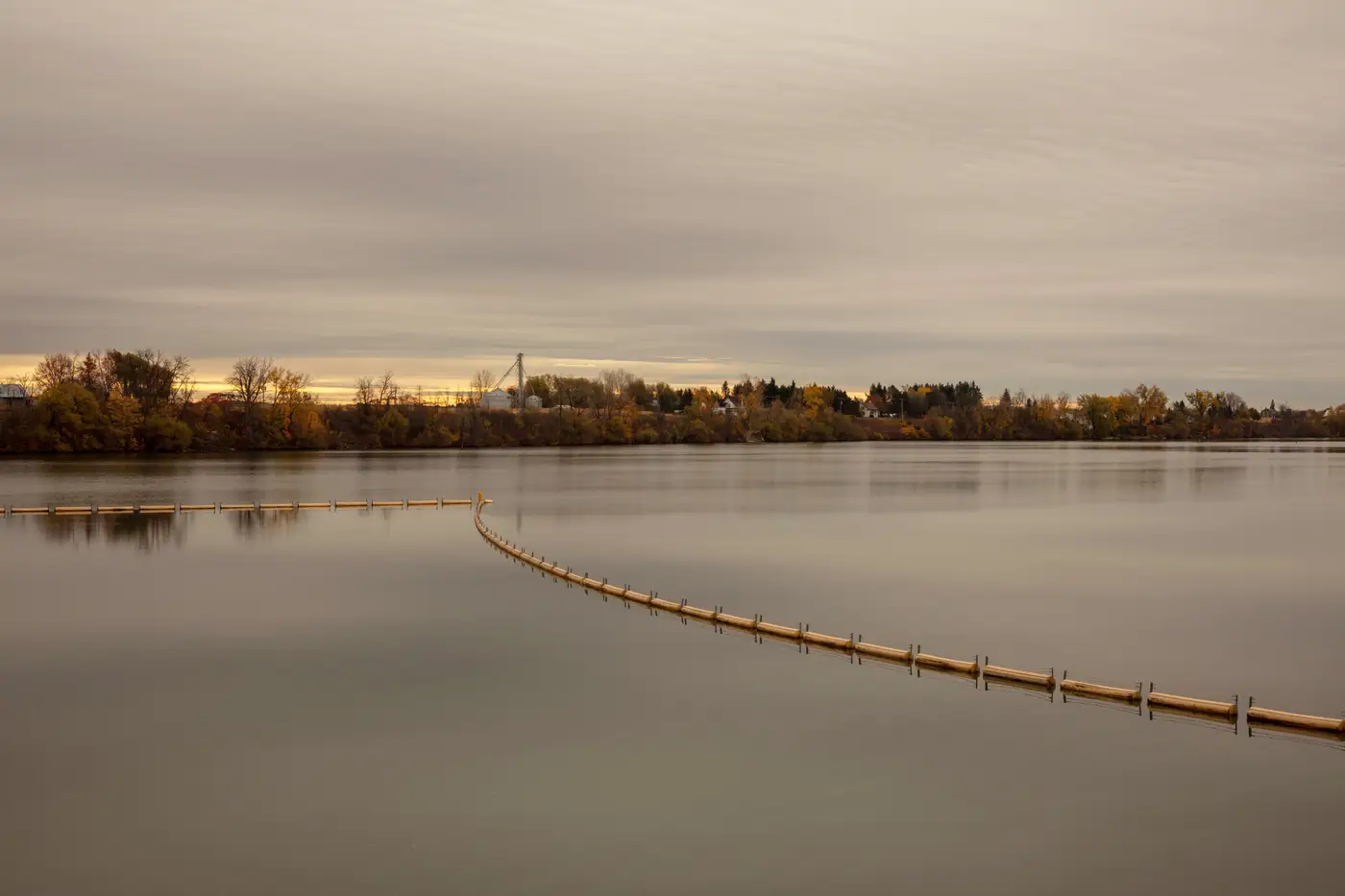
Every programme coordinator who's run a boom through a spring freshet has a story about the one that got away. A boom anchored a week too late, set at the wrong bend, or pulled for maintenance right as the first big rain event loaded the channel with branch litter and plastic that had been sitting in the floodplain since last August. Timing a litter boom deployment means having the structure in the right reach before the flow does the work of moving everything downstream for you.
Why high flow changes where debris collects
Low flow and high flow aren't the same river, debris-wise. At baseflow, floating plastic tends to hang up in slow eddies, behind snags, and along inside bends where velocity drops off. That's where most seasonal booms get sited, because that's where the crew saw bottles pile up last year.
High flow season flips that. Rising discharge remobilizes everything that settled into the floodplain, side channels, and overbank areas during the dry months. A single storm pulse can push weeks of accumulated litter into the main channel at once. The eddies that held debris at low flow might scour clean, while new back-eddies form somewhere the boom was never set. Debris loading during the first flush of a wet season is often heavier and faster-moving than anything the rest of the year produces, and it arrives on a schedule set by weather, not by the maintenance calendar.
This is the part that catches programmes off guard: the collection point that worked all summer can go quiet in October while a completely different bend starts loading up. If the boom stays where it was, the crew ends up servicing an empty structure while debris passes by somewhere else.
Reading the season behind the gauge
A stream gauge tells you discharge is rising. It doesn't tell you where the floating load is stacking up this month, and by the time field crews notice a new accumulation point by eye, the boom's already behind the curve. Most programmes end up reacting, moving a boom after a bad flush instead of ahead of one.
A few things that help with timing, based on what coordinators see on the ground:
- Track the first significant rise after a dry spell closely. That initial pulse usually carries the heaviest debris load of the season, more than later, bigger flow events, because it's flushing out what accumulated over months.
- Expect accumulation zones to shift with discharge, not stay fixed. A boom siting that made sense at 200 cfs may be irrelevant at 2,000 cfs.
- Build in a pre-season check a few weeks ahead of the typical high flow window, not just a post-flood survey. By the time damage or debris is obvious downstream, the siting decision is already late.
- Don't assume last year's hot spot repeats. Channel geometry shifts, upstream land use changes, and a wet winter versus a dry one both move where plastic settles.
Most programmes already put in the effort to get this right. What they're missing is a monthly read on where the plastic is actually piling up right now, versus where it piled up last season or where the crew happened to look last time they were out. Plastic Accumulation was built around exactly that gap, giving a monthly flag on where floating plastic is accumulating along a river or coastline from satellite imagery, so a boom or crew gets sited against current conditions instead of a stale map from the last cleanup.
What good timing looks like
In practice, good timing means the boom (or the crew, if infrastructure isn't feasible yet) is in position before the seasonal rise starts concentrating debris. Watching the accumulation shift as flow climbs matters as much as watching the hydrograph itself. A boom placed for low-flow conditions and left there through the wet season is a boom sited for last quarter's river, not this one.
If your programme is still siting booms off last year's cleanup logs, it's worth checking whether this month's accumulation has already moved somewhere else.