19 October 2026
How to tell floating plastic from algae mats in satellite imagery
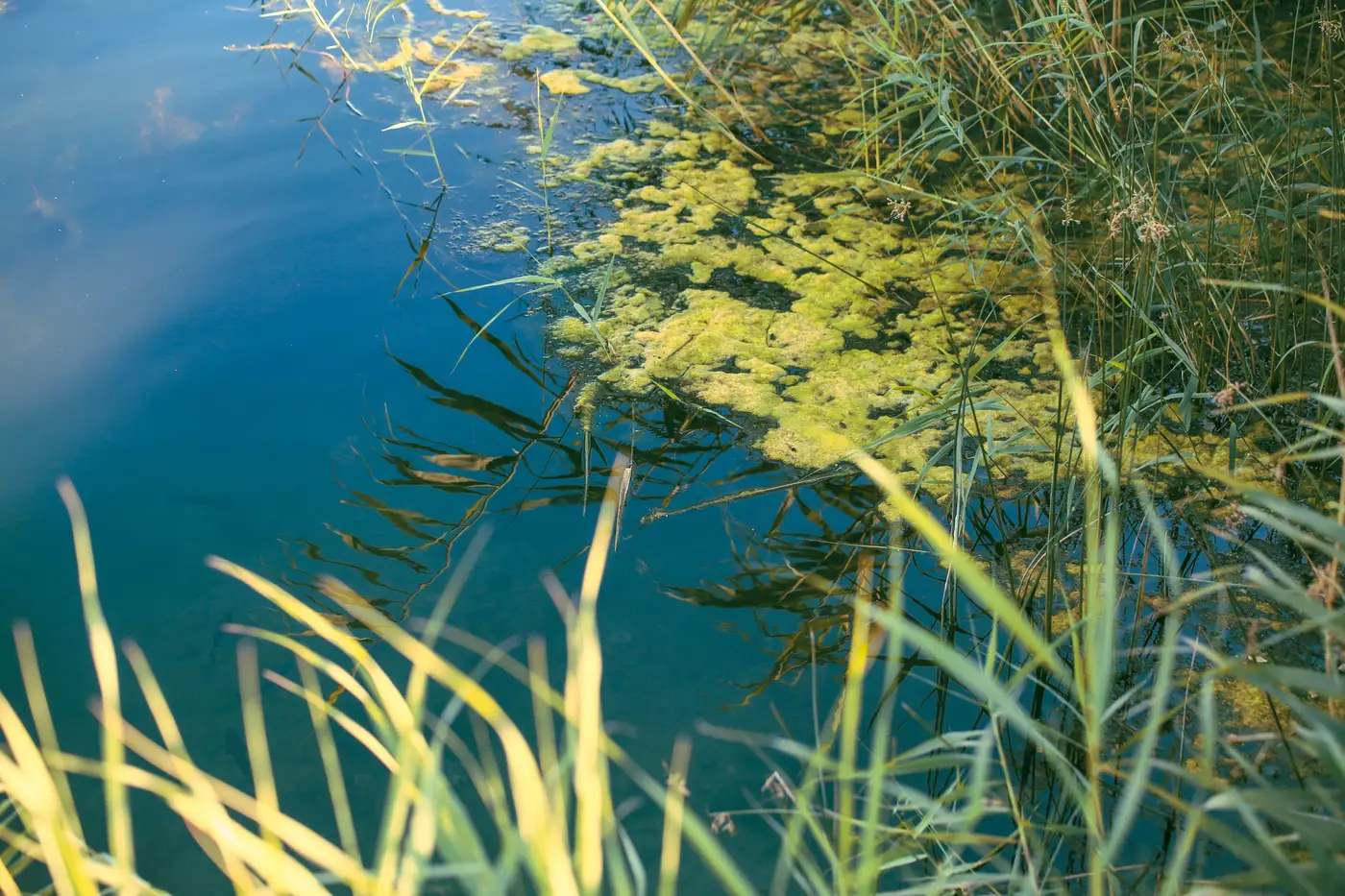
Every spring, somewhere on a slow reach or behind a check dam, a lighter patch shows up on the water that could be either thing. A mat of filamentous algae catching the current the same way a raft of bottles and bags does. From a standard color satellite image, or even from the bank with binoculars on a hazy day, they can look nearly identical: a pale green-brown smear sitting still against darker, moving water.
This is one of the most common sources of wasted siting trips in river cleanup work. A crew drives out to a bend that lit up on last week's scan, and finds algae that's already broken up and drifted on, or finds nothing at all because the "accumulation" was sunglint off a riffle. Knowing what separates plastic from algae in the imagery saves that drive.
Why plain imagery can't tell them apart
A standard RGB satellite image gives you three bands: red, green, blue, the same thing your eye sees. Both algae mats and floating debris reflect more light than open water in all three of those bands, so both show up as a brighter patch. RGB alone has no way to ask what the patch is made of. It can only tell you that something is there and that it's lighter than its surroundings, which is also true of foam lines, sandbars breaking the surface, and glare off a flat stretch of current.
Multispectral imagery adds bands outside what your eye sees, most usefully near-infrared. This is where the two things stop looking alike. Live algae has chlorophyll in its cells, and chlorophyll reflects near-infrared light strongly, almost like healthy leaf cover. That's the same physical property used to separate crops from bare soil in agricultural imagery. Plastic has no chlorophyll. It reflects in the visible bands but drops off differently in near-infrared, and the exact shape of that drop varies by polymer and by how weathered or fouled the material is, but it does not produce the sharp chlorophyll spike algae does.
Running a spectral index across the scene, comparing the near-infrared band against red or green, turns two similar-looking light patches into two patches with measurably different signatures. That's the mechanism behind multispectral debris flagging: a different kind of band to measure against, rather than a sharper photo.
Where false positives still creep in
Spectral separation narrows the problem. It doesn't close it. A few things routinely trip up a single scene:
Sunglint off rippled water can mimic a bright patch in visible bands and distort the index reading underneath it. Dense foam lines, which form naturally at eddy lines and below rapids, can sit in a spectral range close enough to debris to warrant a second look. Exposed sandbars and gravel bars at low flow reflect brightly across all bands and need to be screened out by shape and location, since they don't move month to month the way an accumulation zone does.
This is the real argument for a monthly read instead of a one-off satellite pass. A patch that shows the same signature and the same footprint for two or three consecutive months, sitting in a known recirculation zone behind a bend or a gravel bar, is a much stronger candidate for an interception point than anything flagged once. A patch that reads bright in March and is gone by April was very likely algae that bloomed and broke up, not plastic that someone needs to go collect.
What this means for siting
If you're deciding where to put the next boom or send the next crew, the question isn't just what's lighting up on the scan. It's whether that patch keeps showing up in the same place, scan after scan, in a spot where the river's own currents would actually hold debris rather than just pass it through. Plastic Accumulation runs that monthly comparison on multispectral satellite imagery and flags the river sections where floating material is consistently collecting, so the siting decision is based on a pattern across months rather than a single bright pixel.
If you're tired of chasing patches that turn out to be algae, ask about early access to a monthly accumulation read for your stretch of river.